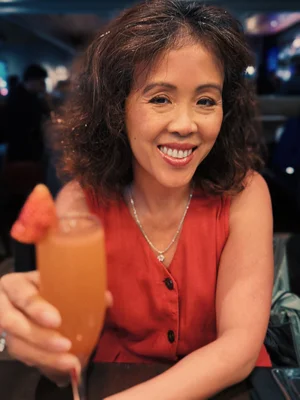
My mom was born on April 15, 1943, in An Phu Dong, Vietnam. She was born into land… into a family where land meant history, stability, and legacy. Her parents were landowners. The land was used to grow jasmine flowers and tropical fruits, and it was meant to be passed down, rooted in generations before her.
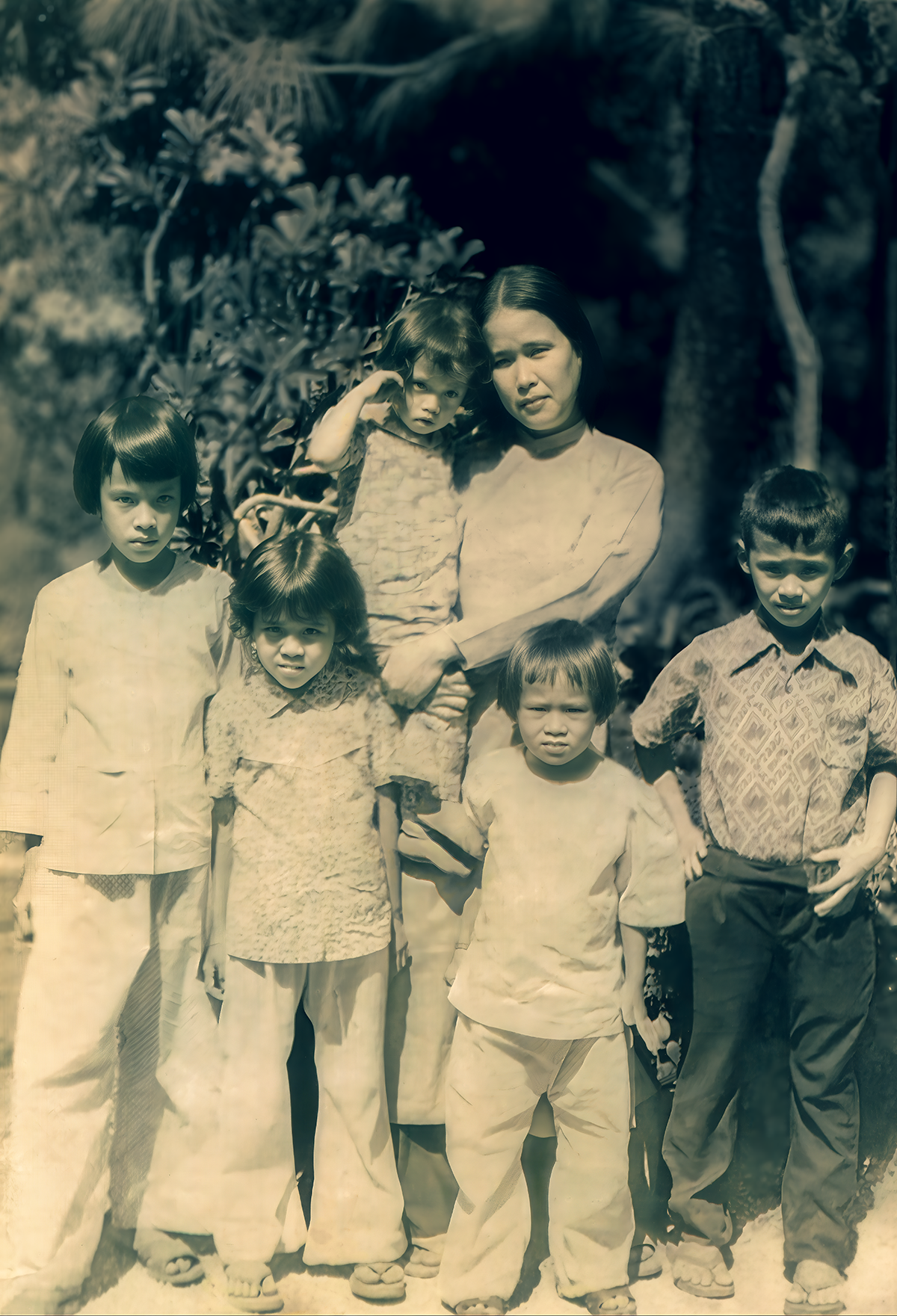
In 1975, war and circumstance separated her from my dad. For seven years, they lived apart, each carrying uncertainty, loss, and hope in different ways. When they reunited in 1982, my mom made a choice that would shape the rest of our lives. She left Vietnam to be with my dad in the United States, choosing family… and the future of her five children… over everything else.
Leaving Vietnam meant forfeiting the land her parents had passed down to her. At the time, she didn’t think twice. She was happy, happy to be reunited with my dad and hopeful that her children would have opportunities she never had. She didn’t complete the paperwork needed to retain ownership. Survival, love, and hope mattered more than legal details.
The land was eventually passed on to our cousins, who sold it off in pieces. They didn’t build on it or preserve it; they sold it to live. For my mom, that loss stayed with her for years. She wasn’t bitter about money—she grieved the loss of legacy. She mourned for her parents and for the land that had held their story. She imagined what could have remained, what might have been built, what future generations could have returned to.
For a long time, that regret weighed heavily on her.
We reminded her, again and again, that she hadn’t lost everything. We told her she had already won. Her legacy wasn’t land—it was us. Her inheritance crossed the ocean in a different form.
All five of her children were given the opportunity to be educated in the United States—an opportunity made possible only through her sacrifice. Each of us found our own path and built a life in our chosen fields. Our stability, our careers, and the lives we have today are the dividends of what she gave up. What she lost in soil, she regained in possibility.
Six months ago, my siblings and I made the decision to move our parents back to Vietnam.
It was not dramatic or sudden. It followed hard conversations, a growing awareness of their needs, and the quiet fear that time was beginning to ask more of them than they could give alone. My mom needed full-time support—someone to live with her, help with daily care, medications, appointments, and the countless small things that make up a dignified life. Just as important, she needed family close by.
I live in Austin, Texas. They were in San Antonio. While my sisters were nearby, none of us could realistically take on full-time caregiving alone. My brother was already living in Saigon, and being near him mattered deeply to my mom, he is her only son and, admittedly, her favorite. Still, knowing a decision is practical doesn’t make it any less emotional.
For my mom, the move meant giving up a version of independence she had known for decades. She left behind a country where she had rebuilt her life from scratch—work, routines, friendships, and habits formed over a lifetime. In many ways, leaving felt less like moving forward and more like closing a chapter she wasn’t ready to end.
Even returning to a familiar culture carries grief when it happens under circumstances you didn’t choose.
Last Christmas was the hardest for all of us. Thanksgiving and Christmas without my mom felt incomplete. Traditions quietly lost their warmth.
Vietnam itself carries layers of meaning.
There is comfort here: the language, the food, the way strangers instinctively show respect to elders. There is something grounding about morning markets, shared meals, and the closeness of everyday life. Care feels personal rather than institutional. Support is woven into the rhythm of family, not scheduled into hourly visits. In subtle ways, Vietnam remembers my mom in a way the West no longer does.
My brother and sister found Thao, my mom’s caretaker, through a placement agency. She seems to be a good fit. Thao was previously a food vendor; she is also a wife and mother, and caregiving comes naturally to her. My mom responds well to her.
And yet, homecoming is complicated.
Some parts of Vietnam are harder for her. In the U.S., she had Medicare, doctor visits and medications were predictable and mostly covered. Healthcare works differently here. There are separate charges for primary care, specialists, and labs. While everything can be done in one day, the time in waiting rooms can be long and exhausting for an aging body. We often check in at 8:00 a.m. and don’t leave until noon.
My mom has high blood pressure, diabetes, and recurring urinary infections, so doctor visits are frequent. The Saigon heat is relentless. It settles into your bones when your body is no longer resilient. To work around it, we walk early in the morning or late in the evening. What once felt manageable now feels draining. Aging, even in a familiar culture, still comes with challenges.
I’m back in Vietnam for a month to check on her, and being physically present has brought clarity that phone calls never could.
I see the small wins: routines forming, caretakers who understand her preferences, and quiet moments when she laughs and tells stories from 50 or 60 years ago—stories she remembers vividly. She may not recall what she ate yesterday, but poetry from school and memories of her parents, brothers, and sisters remain deeply intact, still alive in her body.
I also see the struggles. Some days, frustration lasts longer than gratitude. Some days, she misses what was familiar simply because it was hers.
Now she is back in Vietnam.
Everywhere we go, especially in An Phu Dong, she is met with respect from neighbors and relatives. When I walk through the market, people recognize me because I share her face. She is comfortable here. She belongs.
The land may be gone, but her place in the family, and in history, remains intact.
I pray for peace: for my mom, for this country, and for the past she carried for so long.
This is a reverse refugee story.
My mom left Vietnam with land and returned with legacy.
She traded soil for souls, ownership for opportunity.
And in letting go of regret, I hope she has finally found peace.
To be continued.